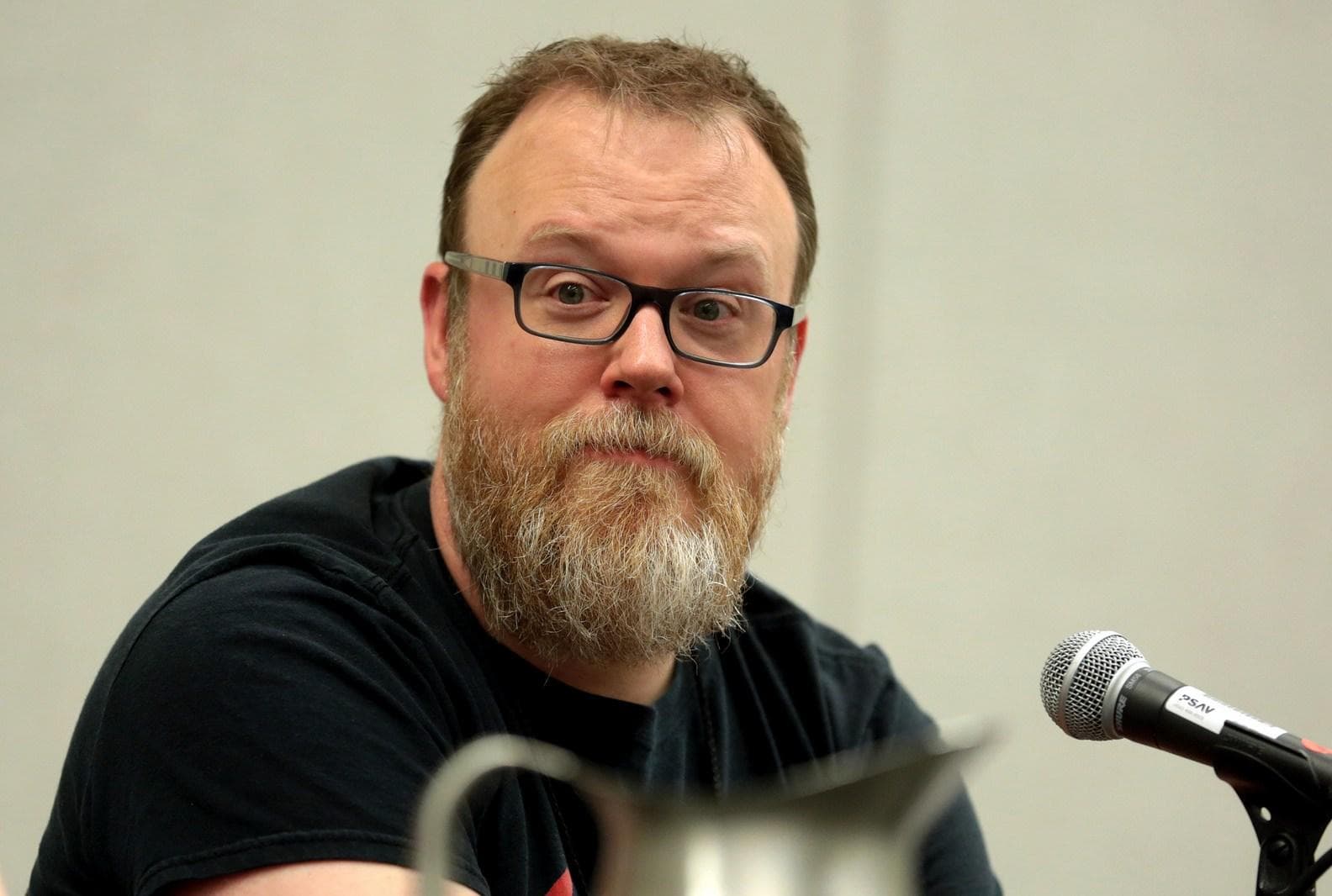

A Bestselling Author (Chuck Wendig) Called AI Authors Fake. Here's What He Got Wrong
- On February 9, 2026, New York Times bestselling author Chuck Wendig wrote that "writers who use AI are not real writers," calling it "the red line." (Terribleminds)
- The post responded to a New York Times profile of Coral Hart, a pseudonymous romance author who used Anthropic's Claude to generate 216 novels under 21 pen names in 2025, selling roughly 50,000 copies. (The New York Times, via Cybernews)
- Hart told the Times, "If I can generate a book in a day, and you need six months to write a book, who's going to win the race?" (Cybernews)
- Amazon's actual KDP policy does not ban AI use. It requires authors to disclose AI-generated content and treats AI-assisted work as a separate category. (Amazon KDP)
- 51% of published novelists surveyed by Cambridge's Minderoo Centre said they believe AI will eventually replace their fiction writing work entirely. (Minderoo Centre for Technology and Democracy, via Cybernews)
Chuck Wendig has written more than two dozen books, including the New York Times bestseller Wanderers and the Star Wars: Aftermath trilogy. On February 9, 2026, he published a blog post that did not hedge: "Writers who use AI are not real writers... Real writers don't use AI. That's the red line." The post went up hours after the New York Times profiled Coral Hart, a pseudonymous author who used Anthropic's Claude to produce 216 romance novels under 21 pen names in a single year. Wendig's anger at Hart is earned. His rule for everyone else is not, and it sweeps in founders, coaches, and first-time authors who use AI as part of a real writing process, one with editing, judgment, and their own voice behind it.
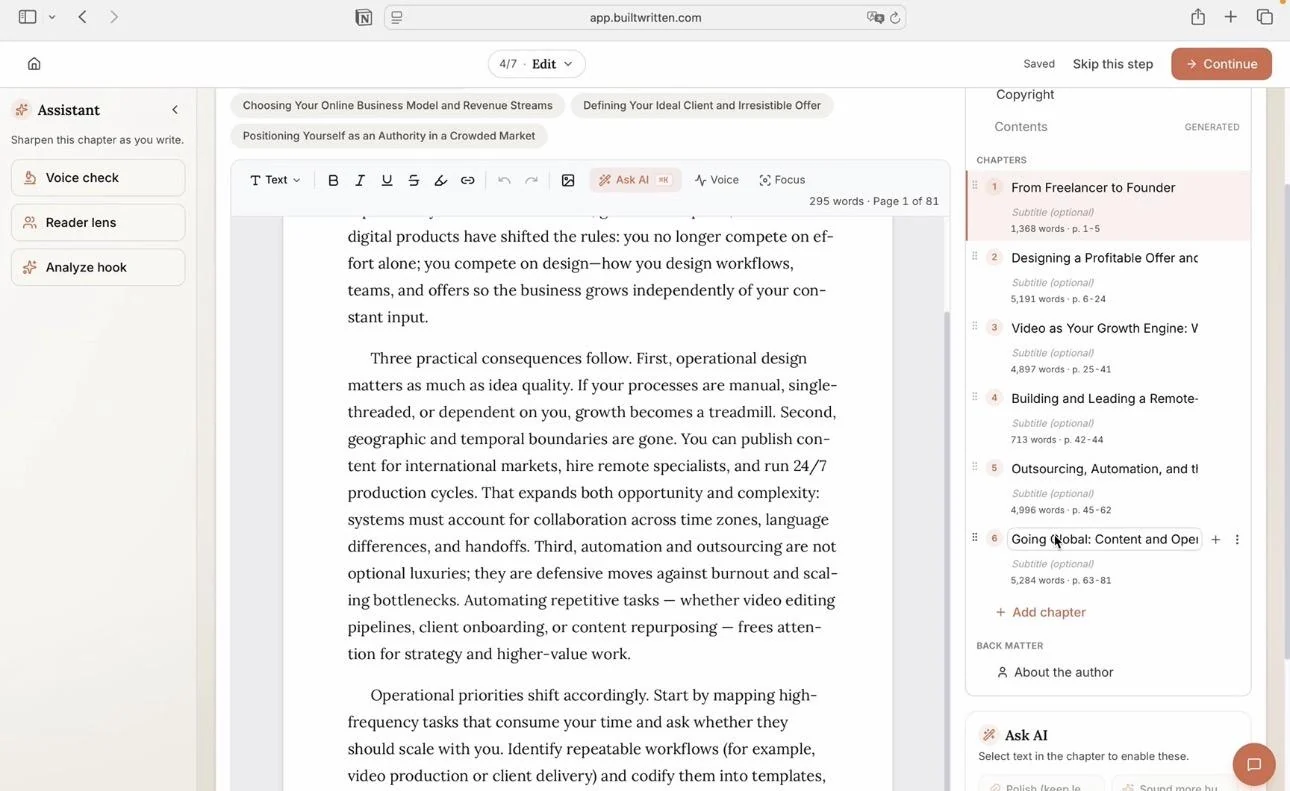
We build Wren, an AI book-writing platform for founders and coaches who want a finished business book without months of drafting from scratch, so this distinction isn't academic to us. We've watched founders spend months manually rewriting AI drafts that still sounded generic, which is exactly the gap Wren's chapter checks were built to close. It generates chapters from a person's own notes and calls, and every chapter still needs a human decision about voice, claims, and structure before it ships. That distinction, between generating a book and writing one with AI's help, is what Wendig's post collapses.
1. What Wendig got right about Coral Hart
The Times reported that Hart began using Claude in 2025 and, across 21 pen names, published 216 romance novels that sold around 50,000 copies. She told the paper, "If I can generate a book in a day, and you need six months to write a book, who's going to win the race?" and now sells other writers a course on the same approach. Wendig's response was blunt: "She's not writing anything... drawing up the juice of an infinity of other books, all stolen." Bestselling romance novelist Marie Force made a related point to the Times: the flood of AI titles "makes it difficult for newer authors to be discovered."
Nothing about Hart's process resembles editing, fact-checking, or building a voice. It resembles volume production. A reader who buys one of her 216 novels has no way to know it was one of dozens generated that month under a name invented for the purpose. That's a real problem, and a different one from a founder using AI to draft a chapter she then rewrites herself.
2. The rule he wrote is bigger than the target he meant
"Writers who use AI are not real writers" is not a rule about Coral Hart specifically. It's a rule about anyone who opens an AI tool while writing, which by 2026 includes a large share of working authors, most using it for outlining, research, or line-editing rather than full generation. Wendig's own definition, "real writers write, that's it," doesn't distinguish between a founder who used AI for a rough first pass and spent three weeks rewriting it, and someone who generated 216 books and never opened an editor. Both fall on the same side of his red line.
A rule that can't tell the two apart isn't describing what makes Hart's books hollow. It's describing tool use, a much blunter and less useful line.
3. Speed was never the real problem
Hart's own framing, "who's going to win the race," treats writing as a speed contest, the framing Wendig pushes back on hardest. But speed is a distraction from what actually makes her books thin: nobody checked them. A chapter generated in minutes and never revised reads exactly the way AI writing typically reads. Flat sentence rhythm, hedge language instead of a real position, claims with no example attached, no voice a reader could tell apart from a competitor's, the same patterns we break down in 6 Signs Your Writing Sounds Like AI. None of that comes from speed. It comes from skipping the edit.
A book can take six months or forty-five minutes to draft. Either way, what matters is whether a human went back through it and made the calls a model can't make alone: which claim needs a real example, which sentence sounds like everyone else's. Skip that step and the book stays thin no matter how it was drafted.
4. Amazon already drew this line, and it isn't "no AI"
Wendig writes as though the industry's actual authority on this question agrees with him. It doesn't, not the way he means it. Amazon's KDP guidelines require authors to disclose AI-generated content at publishing time, and treat that category separately from AI-assisted work, where a human writes and edits with AI as a tool. We cover the exact rules in Do You Have to Disclose AI in Your Book? KDP's 2026 Rules. The platform Hart used doesn't prohibit what she did. It asks her to say so, a narrower ask than Wendig's, and arguably a more useful one.
The functioning rule publishing runs on is disclosure and authorship, not a ban on AI touching the page. That's narrower and more workable than "real writers don't use AI," and it's the one that already governs every book sold on Amazon.
5. The blanket rule punishes the people doing it right
The cost of Wendig's version of the line isn't paid by Coral Hart. She's already selling books and courses regardless of what any blogger calls her. It's paid by the founder, coach, or first-time author who directs the AI, rewrites in her own words, fact-checks every claim, and still gets told she is "not a real writer" the moment anyone learns AI touched the draft. That's a strange incentive to hand an industry that already punishes undisclosed AI writing on its own. One Bynder study found 52% of readers disengage the moment they suspect a piece is AI-generated, even after rating the same text highly minutes earlier, a gap we cover in How AI Helps Entrepreneurs Write Books Without Losing Their Voice. Readers already reward the editing and voice work Wendig says matters. A rule that treats tool use as disqualifying doesn't add protection. It tells the people editing carefully that the label was never available to them anyway.
We've built Wren's process around exactly this gap. It generates chapters from a founder's own notes and calls, then checks each one against sentence rhythm, word choice, hedging, proof, structure, and voice before it ships, the same markers Hart's books skip, covered in Voice Matching AI Writing That Sounds Like You. We run that same six-point check against every article on this blog, including this one, before it publishes. The tool speeds up the mechanical part. The judgment stays with whoever's name is on the cover, the test Wendig says he actually cares about.
Wendig is right that Coral Hart isn't doing the work of a writer. He's wrong that AI touching a draft is what disqualifies her. What disqualifies her is that nobody, including her, went back through 216 books and did the editing, fact-checking, and voice work that separates a written book from a generated one. That's a checkable line. "Did you use AI" is not.
Final thoughts
The test Wendig actually wants isn't "did a human type every word." It's "did a human do the work that makes a book worth reading": choosing what to say, checking that it's true, building a voice a reader can recognize as one person's. Coral Hart failed that test 216 times in a year. A founder who drafts with AI and spends real time rewriting, fact-checking, and shaping the voice passes it, whatever tool sat next to her while she worked. Built&Written built Wren around that distinction, not around whether AI is involved at all: every chapter starts from a founder's own material and doesn't ship until it clears the same checks Coral Hart's books never got. The tool changes how fast a first draft appears. It doesn't change who is responsible for what the book says.
Frequently asked questions
We build one, which is worth naming directly. It's also why this distinction matters to us: we've watched founders spend months rewriting AI drafts that still read generic, and built Wren's checks around the editing and voice work Coral Hart's books skip. The argument rests on Amazon's published KDP policy and the reader-trust research cited above, which hold regardless of who's making the point.
No. KDP requires authors to disclose AI-generated content at publishing time and treats it separately from AI-assisted work, where a human writes and edits with AI as a tool. See Do You Have to Disclose AI in Your Book? KDP's 2026 Rules for the exact requirements.
Not based on what's been reported. Her books went through the same self-publishing channels available to any author, and there's no indication she violated KDP's disclosure policy. The criticism is about quality and process, not legality.
Wren generates chapters from a founder's own notes and calls rather than a generic prompt, and every chapter is checked for sentence rhythm, word choice, hedging, proof, structure, and voice before it's done. Hart's stated process, one novel every 45 minutes across 21 pen names, has no equivalent edit pass.
Sources & References
About the author

Khrystyna Balushka
More in pain-point
Ready to write your book?
Turn your expertise into a professional book with Built&Written.